Longevity University
Short, cited lessons on the biology of aging and metabolic health, with original diagrams. Education only, not medical advice.
Educational information only. Nothing here diagnoses, treats or prevents disease, and no Everstack product is sold for diabetes. If you have diabetes or take medication, talk to your clinician.
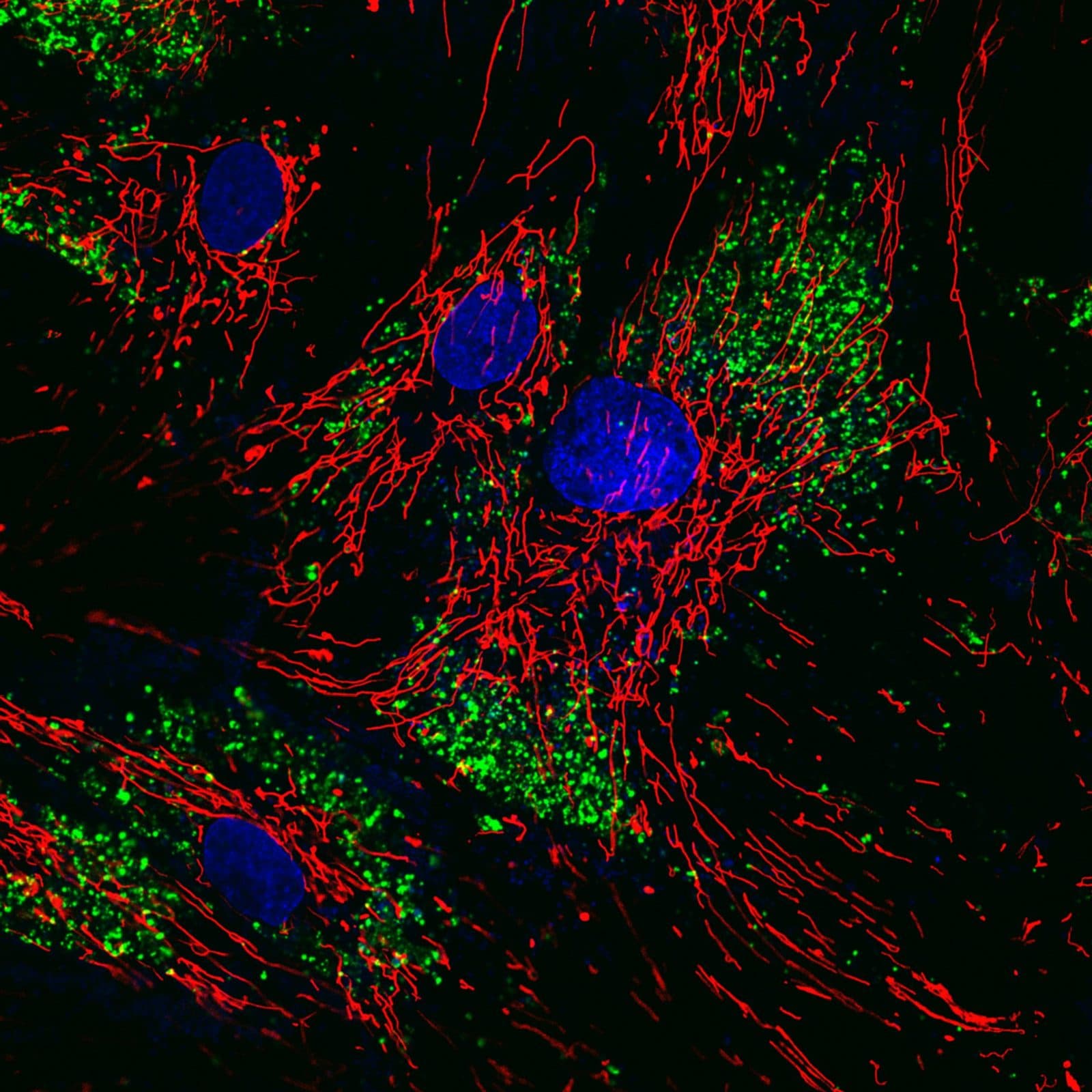
Mitochondria in human fibroblasts.
Lessons explain the mechanism, then say what it has shown in people.
mTOR and AMPK: the cell's nutrient sensors
Two signaling hubs decide whether a cell builds or conserves. Food, protein, exercise, rapamycin and metformin all push on them.
8 min · 7 sources · quiz
02Cellular senescence and senolytics
Damaged cells that stop dividing but do not die can inflame nearby tissue. Clearing them helps mice; human evidence is early.
6 min · 4 sources · quiz
03The information theory of aging, sirtuins and NAD+
David Sinclair's lab argues aging is largely loss of epigenetic information. The idea is testable and now in a phase 1 trial, but parts of the sirtuin story did not hold up.
9 min · 9 sources · quiz
04Brown fat and cold exposure
Adults have heat-burning brown fat that cold can activate. People who have it tend to have better metabolic health, but cause and effect is not settled.
5 min · 3 sources · quiz
05Visceral fat: the fat that matters most
Fat around the organs is a stronger risk marker than weight alone.
4 min · 2 sources · quiz
06Metabolic health hub: insulin resistance, prediabetes and type 2 diabetes
How blood sugar control breaks down, how it is measured (HbA1c, CGMs), what lifestyle trials show, and where GLP-1 drugs fit. Education only.
10 min · 6 sources · quiz
07Berberine: a deep dive
A plant alkaloid with meta-analyses on glucose and lipids, an AMPK mechanism, real GI side effects and real drug interactions.
8 min · 6 sources · quiz